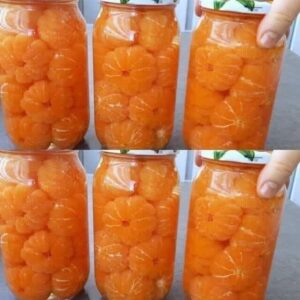
Canning and Preserved Tangerines
Introduction
Canning and preserved tangerines is a beautiful way to save the sweet and juicy taste of fresh citrus fruit for many months. Tangerines are bright, soft, and full of natural flavor. When they are in season, they are usually affordable and easy to find in the market. But their season does not last very long. By learning how to can and preserve tangerines at home, you can enjoy their sunshine flavor even in colder months. This simple method keeps the fruit soft, sweet, and ready to use in desserts, salads, or snacks.
Many people love preserved tangerines because they taste fresh and natural compared to store bought canned fruit. When you prepare them at home, you control the amount of sugar and ingredients. There are no artificial colors or strong preservatives. The process of canning may look difficult at first, but it is actually simple when you follow clear steps. Seeing jars filled with golden orange slices on your kitchen shelf feels very satisfying. It gives a warm and homely feeling that reminds you of family kitchens and traditional cooking.
This recipe is perfect when tangerines are ripe and full of juice. If you buy a large quantity or grow your own citrus fruit, preserving them prevents waste. It is also helpful for people who enjoy baking and cooking. Preserved tangerines can be used in cakes, yogurt bowls, pancakes, or fruit salads. They add natural sweetness and a fresh citrus flavor. On days when you feel low or tired, the bright taste of tangerines can lift your mood. Canning and preserving tangerines is not just about food storage. It is about keeping a little sunshine in a jar.
Ingredients You Will Need
Fresh tangerines 2 kilograms
Granulated sugar 2 cups about 400 grams
Water 4 cups about 1 liter
Lemon juice 3 tablespoons about 45 milliliters
Equipment
Glass canning jars 5 medium jars about 500 milliliters each
New lids and metal bands
Large deep pot for boiling water
Small saucepan for syrup
Clean kitchen towel
Tongs or jar lifter
Step by Step Method
Step 1 Select and wash the tangerines
Choose tangerines that are firm, bright in color, and free from damage. Wash them gently under cool running water. Dry them with a clean cloth.
Step 2 Peel and prepare the fruit
Carefully peel the tangerines and separate them into segments. Remove as much white fiber as possible because it can taste slightly bitter. If you see seeds, remove them gently. Try to keep the segments whole so they look beautiful inside the jars.
Step 3 Sterilize the jars
Place the glass jars in a large pot filled with water. Make sure they are fully covered. Boil for about 10 minutes to kill bacteria. Remove the jars carefully using tongs and place them upside down on a clean towel. Keep the lids in warm water to soften the sealing part.
Step 4 Prepare the syrup
In a saucepan, add water and sugar. Heat on medium flame and stir until the sugar fully dissolves. Let it come to a gentle boil. Turn off the heat and add lemon juice. The lemon juice helps keep the color bright and adds a slight fresh taste.
Step 5 Fill the jars
Place the tangerine segments neatly into the sterilized jars. Do not press too hard, but fill them properly. Pour the hot syrup over the fruit until fully covered. Leave about 2 centimeters space at the top of each jar.
Step 6 Remove air bubbles
Use a clean spoon to gently move inside the jar to release trapped air bubbles. Wipe the rim of each jar with a clean cloth. Place the lids on top and screw the metal bands until secure but not too tight.
Step 7 Water bath process
Place the filled jars back into the large pot with boiling water. The water should cover the jars by at least 2 to 3 centimeters. Boil for about 15 minutes. This process helps create a strong seal and keeps the fruit safe for storage.
Step 8 Cool and store
Carefully remove the jars and place them on a towel. Let them cool at room temperature for 12 to 24 hours. You may hear a popping sound, which means the jars are sealing. After cooling, press the center of each lid. If it does not move, the jar is sealed properly. Store in a cool and dark place.
Protein and Nutrition Details
Tangerines 2 kilograms provide about 16 grams of protein in total. They are rich in vitamin C, fiber, and antioxidants.
Sugar does not provide protein but adds sweetness and helps preserve the fruit.
Lemon juice provides a very small amount of protein but supports vitamin C intake.
Total protein in the full recipe is approximately 16 grams. If divided into 5 jars, each jar contains about 3 grams of protein. While protein is not high, preserved tangerines are valuable for vitamins and natural energy.
Why This Recipe Is Special
Canning and preserved tangerines is special because it captures the bright citrus taste at its best moment. Instead of losing fruit when the season ends, you save it for later. The flavor stays fresh and sweet inside the syrup.
This recipe is also flexible. You can adjust the sweetness by adding less sugar if you prefer a lighter taste. Homemade preserved fruit is usually fresher than store options. You also avoid unnecessary additives.
From a health point of view, tangerines are full of vitamin C which supports the immune system. They also provide fiber for digestion. Having preserved tangerines ready makes it easy to add fruit to your meals.
Extra Tips for Better Taste
Add a small piece of cinnamon stick into the syrup for a warm flavor.
You can add a few vanilla drops to the syrup for a soft sweet aroma.
Use organic tangerines if possible for better quality.
Always check seals before storing for long periods.
Label jars with the date so you remember when you prepared them.
Refrigerate after opening and use within a few days.
Final Thoughts
Canning and preserved tangerines is a simple and rewarding kitchen skill. It allows you to enjoy fresh citrus flavor even when the season is over. The process is easy when you follow each step carefully. Seeing bright orange segments inside clear jars brings happiness and satisfaction. This recipe is perfect for beginners who want to start preserving fruit at home. Once you try it, you may want to preserve other fruits as well. It is a beautiful way to save flavor, reduce waste, and enjoy homemade goodness.
Disclaimer
This article is for general information only. Everyone’s body is different, and results may vary. Always follow proper food safety practices when canning at home. If you are unsure about safe preservation methods, consult a trusted food safety expert before storing preserved foods.