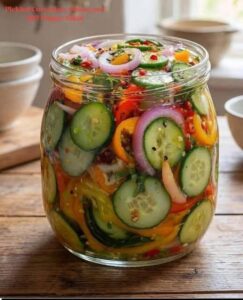
Summer Salad Save for 2 Month in Jar
Introduction
A summer salad saved for two months in a jar is a simple and practical way to enjoy fresh vegetables even after several weeks. This recipe is made by placing crisp vegetables inside a clean jar and covering them with a flavorful pickling liquid. The mixture helps keep the vegetables fresh and tasty for a longer time. Many people enjoy this method because it allows them to prepare a healthy salad in advance and store it in the refrigerator. When the jar is opened, the vegetables are still crunchy, colorful, and full of flavor. It is a convenient recipe for people who like homemade food but want something that lasts longer.
People love this type of jar salad because it combines freshness with convenience. Instead of preparing a new salad every day, you can make a large batch once and enjoy it for many days. The vegetables slowly absorb the light dressing, which makes them even more flavorful over time. Another reason this recipe is popular is its bright appearance. The layers of cucumbers, carrots, onions, and peppers create a beautiful mix of colors in the jar. This makes the salad look very appealing even before you taste it.
This salad is especially popular during warm weather when people want light and refreshing meals. It can be served as a side dish with lunch or dinner, or enjoyed as a healthy snack during the day. Many people prepare jar salads when they want something quick and refreshing without cooking. It is also useful for busy weeks when you want ready to eat vegetables in the refrigerator. The crisp taste and bright flavor make this salad a perfect addition to many meals.
Ingredients You Will Need
Cucumbers 4 medium about 800 grams
Carrots 2 medium about 150 grams
Red bell pepper 1 large about 150 grams
Green bell pepper 1 large about 150 grams
Red onion 1 medium about 120 grams
Cherry tomatoes 1 cup about 150 grams
Apple cider vinegar 1 cup about 240 milliliters
Water 1 cup about 240 milliliters
Olive oil 2 tablespoons about 30 milliliters
Honey 2 tablespoons about 40 grams
Sea salt 1 teaspoon about 5 grams
Black pepper half teaspoon about 2 grams
Garlic 3 cloves minced about 9 grams
Fresh dill 2 tablespoons chopped about 10 grams
Fresh parsley 2 tablespoons chopped about 10 grams
Step by Step Method
Step one clean the vegetables
Wash all the vegetables under cool running water. This helps remove dirt and keeps the salad fresh.
Step two prepare the cucumbers
Slice the cucumbers into thin rounds. Thin slices allow the pickling liquid to flavor them evenly.
Step three prepare the carrots
Peel the carrots and cut them into thin sticks or small rounds.
Step four prepare the peppers
Remove the seeds from the red and green bell peppers and slice them into thin strips.
Step five prepare the onion
Peel the red onion and slice it into thin rings.
Step six prepare the tomatoes
Wash the cherry tomatoes and cut them in half.
Step seven prepare the jar
Wash a large glass jar with hot water and allow it to dry completely.
Step eight layer the vegetables
Place the cucumbers at the bottom of the jar. Add carrots, peppers, onion, and tomatoes on top. Continue layering until the jar is filled.
Step nine prepare the pickling liquid
In a bowl combine apple cider vinegar, water, olive oil, honey, sea salt, black pepper, and minced garlic. Stir well until the honey dissolves.
Step ten add fresh herbs
Mix chopped dill and parsley into the liquid for extra flavor.
Step eleven pour the liquid into the jar
Slowly pour the prepared liquid over the vegetables until they are fully covered.
Step twelve seal the jar
Close the jar tightly with a lid.
Step thirteen store the jar
Place the jar in the refrigerator. Allow the vegetables to sit for at least twenty four hours so they absorb the flavors.
Step fourteen enjoy the salad
The salad can be enjoyed after one day and stored for up to two months in the refrigerator when kept sealed.
Protein and Nutrition Details
Cucumbers 800 grams provide about 6 grams of protein.
Carrots 150 grams provide about 1.2 grams of protein.
Bell peppers 300 grams provide about 3 grams of protein.
Red onion 120 grams provides about 1.3 grams of protein.
Cherry tomatoes 150 grams provide about 1.5 grams of protein.
Fresh herbs and other ingredients contribute small amounts of protein.
The total protein content of the entire jar is approximately 13 grams of protein. While this salad is not mainly a protein source, it provides vitamins, minerals, and hydration from fresh vegetables.
Why This Recipe Is Special
This recipe is special because it allows fresh vegetables to stay flavorful for a long time. The pickling liquid helps preserve the vegetables while keeping them crisp and refreshing.
Another reason this salad stands out is the beautiful layered appearance in the jar. The mix of green, red, and orange vegetables creates a colorful dish that looks attractive.
The recipe is also very simple and beginner friendly. It does not require cooking and can be prepared in a short time.
It is also a practical option for people who enjoy meal preparation. Having ready to eat vegetables in the refrigerator can make healthy eating easier.
Extra Tips for Better Taste
Using very fresh vegetables will give the best crunchy texture.
Adding a small amount of lemon juice can make the flavor brighter.
A few mustard seeds can add extra aroma to the pickling liquid.
Slicing vegetables evenly helps them absorb the flavor better.
Shaking the jar gently before serving helps mix the dressing.
Serving the salad cold makes it even more refreshing.
Final Thoughts
Summer salad saved for two months in a jar is a convenient and refreshing recipe that makes healthy eating easier. The crisp vegetables combined with a light pickling liquid create a dish that stays flavorful for a long time. It is simple to prepare and perfect for people who enjoy fresh homemade food. This salad can be served with many meals or enjoyed on its own as a light snack. Once you try making this jar salad, it may become a regular part of your kitchen routine because of its freshness and convenience.
Disclaimer
This article is for informational and educational purposes only. Nutritional values may vary depending on ingredient quality, portion sizes, and preparation methods. Every person has different dietary needs and health conditions. The results of consuming foods mentioned in this article may vary from person to person. If you have specific dietary concerns or medical conditions it is recommended to consult a qualified health professional before making major changes to your diet.